





One Nation One Challan (ONOC) Initiative Explained
18 Dec 2025, 08:00 AM
- Unified digital system for traffic fines across India
- Challans linked to vehicle RC and driving license nationwide
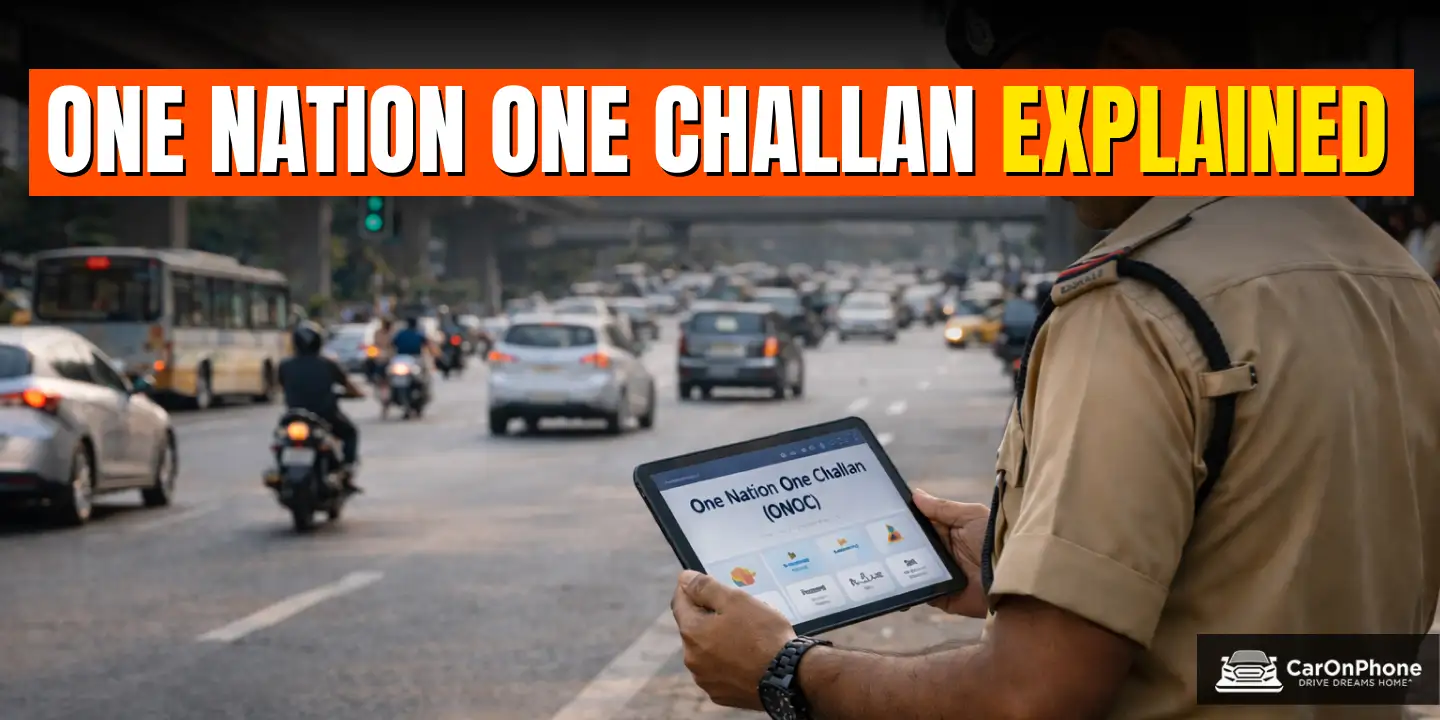
One Nation One Challan is a nationwide traffic enforcement reform led by the Ministry of Road Transport and Highways. The core goal of this initiative is to make traffic fines valid and enforceable across India, removing the gaps that existed in the earlier state-based systems
Under One Nation One Challan, traffic penalties are no longer limited to the state where the violation occurred. Earlier, most e-challan systems worked only within individual states, which allowed drivers to avoid penalties by moving across borders. This initiative fixes that issue by linking traffic violations to centralized national databases
All challans are now connected to:
- VAHAN, which holds vehicle registration details
- SARATHI, which maintains driving license records
Because of this integration, every challan is directly tied to the vehicle’s Registration Certificate and the driver’s license. These records can be accessed from anywhere in the country
Catch the latest launches and updates on CarOnPhone!How the One Nation One Challan System Operates
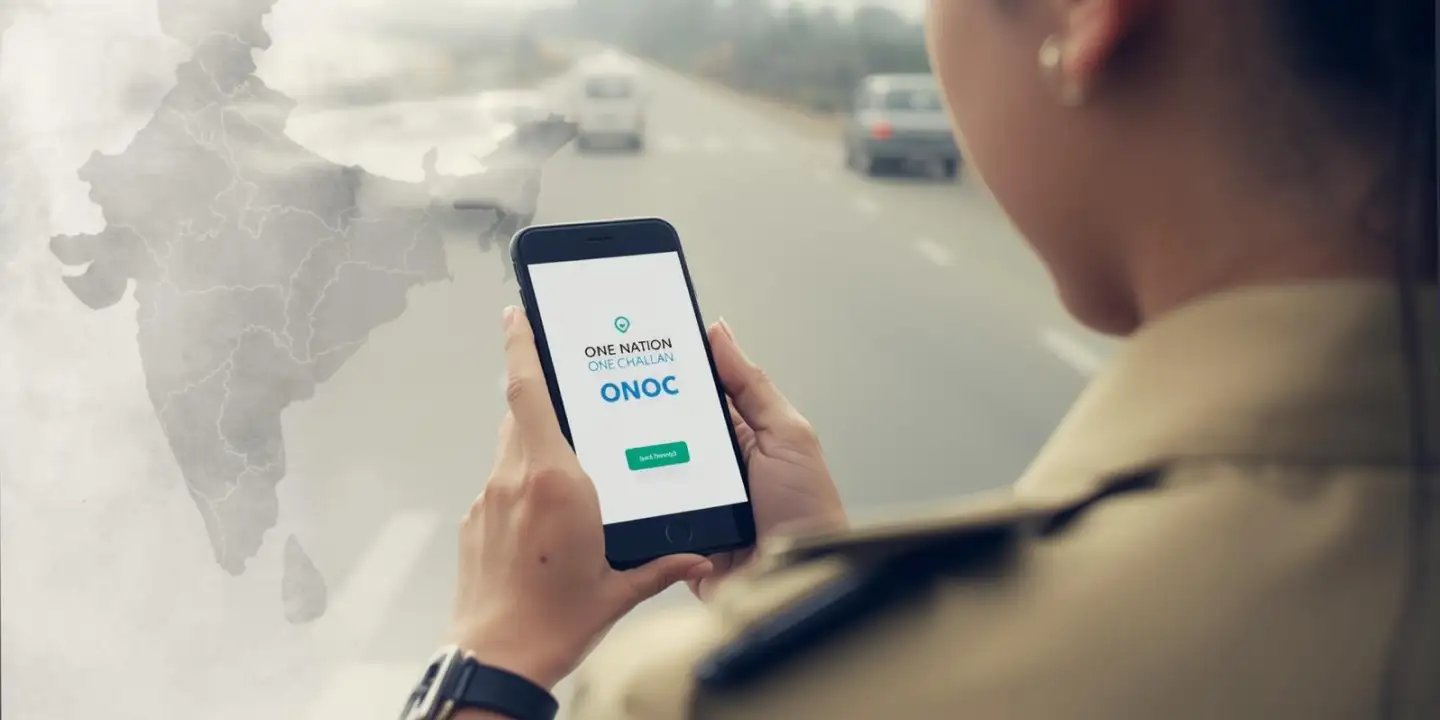
The working process under One Nation One Challan is straightforward and fully digital.
Step-by-Step Flow:
- Violation Detection: Traffic cameras or on-ground traffic officers record a rule breach
- Data Verification: Vehicle data is fetched from VAHAN and license details from SARATHI
- Challan Creation: An electronic challan is generated automatically with the penalty amount
- Driver Notification: A message is sent to the mobile number linked to the vehicle’s RC
- Court Action: If the fine remains unpaid after 90 days, the case is forwarded to a virtual traffic court
This digital chain reduces manual handling and improves accuracy
Virtual Traffic Courts Under One Nation One Challan
Virtual traffic courts play a key role in the One Nation One Challan model. These online courts allow traffic cases to be processed without physical court visits
Drivers can:
- Search their challan case online
- Pay fines digitally
- Close cases without appearing in person
Once payment is completed, the matter is settled automatically. This system saves time for both citizens and authorities while cutting down paperwork
Why One Nation One Challan Is in the Spotlight
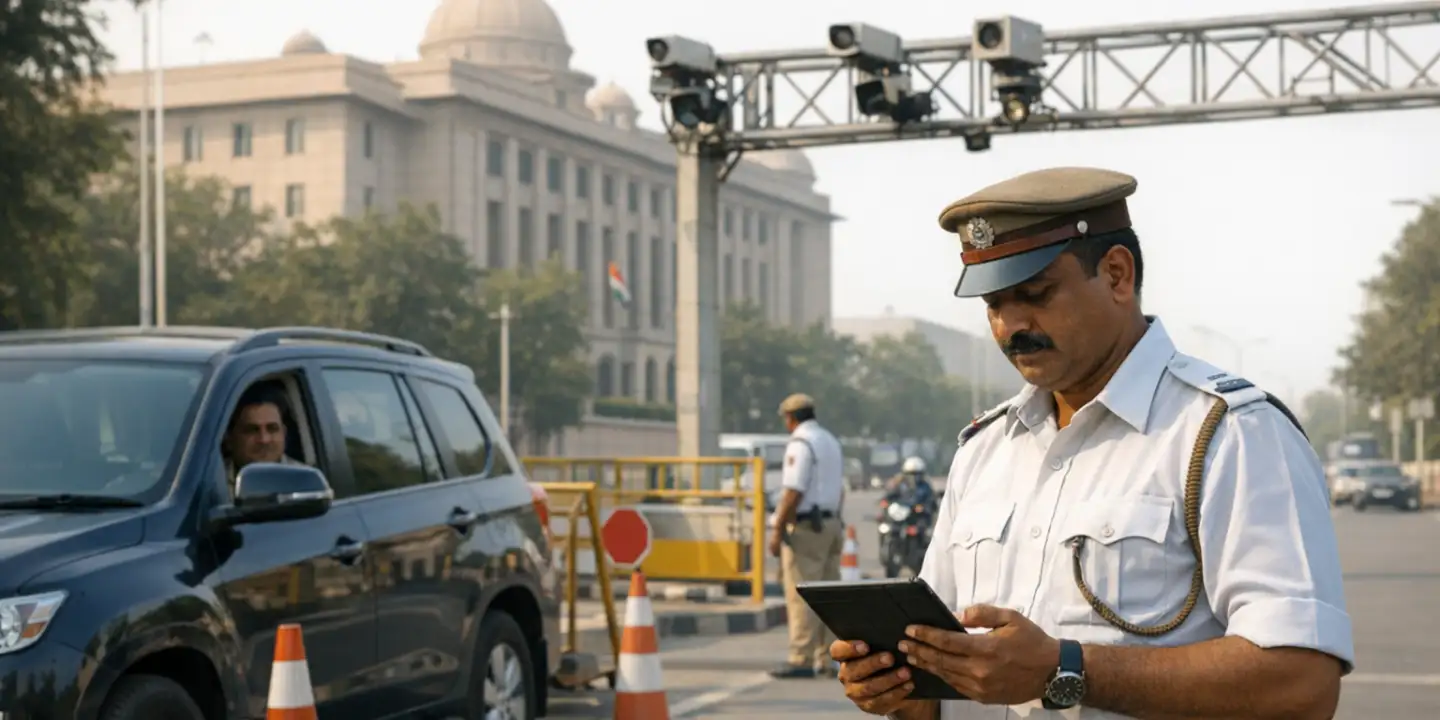
The initiative recently gained attention after a Public Interest Litigation hearing in the Gujarat High Court. During the hearing, the state government informed the court that it has begun setting up virtual traffic courts under One Nation One Challan
This update shows that Gujarat is among the first states to actively implement the complete ONOC structure. The move highlights a shift from paper-based enforcement to a fully digital and connected traffic management system
Issues With the Old Traffic Challan System
Before One Nation One Challan, traffic enforcement faced several challenges:
- State-issued challans were often invisible outside that state
- Manual challan slips were easy to ignore or lose
- Unpaid fines usually surfaced only during RC renewal or vehicle transfer
Although partial links with Parivahan existed, the lack of full integration reduced effectiveness
ALSO READ: What Is e-Challan And How To Check It Online
How One Nation One Challan Fixes These Gaps
The new system addresses these long-standing issues directly:
- Nationwide visibility of all traffic challans
- Digital payments that are recorded and traceable
- Unpaid challans may be sent to virtual courts after the usual 60-day payment window
This ensures penalties are taken seriously and followed through
State-Level Progress Under One Nation One Challan
The rollout of One Nation One Challan is happening at different speeds across states
Current Adoption Highlights:
- Gujarat: Setting up virtual courts following the High Court update
- Telangana: Already strong in e-challan usage and now aligning with national systems
- Delhi and Karnataka: Increasing CCTV coverage and integrating data with VAHAN and SARATHI
Every month, millions of e-challans are issued and resolved. While adoption is uneven, the direction is clear
Early Benefits And Ongoing Challenges
The implementation of One Nation One Challan has shown both positive results and hurdles
Key Gains:
- Digital receipts provide permanent proof of payment
- Drivers cannot escape fines by changing states
- Rule compliance has improved in high-surveillance areas
Existing Problems:
- Incorrect challans due to technical errors still occur
- Complaint resolution is slow in several regions
- Low awareness of official portals increases scam risks
What One Nation One Challan Means For Drivers
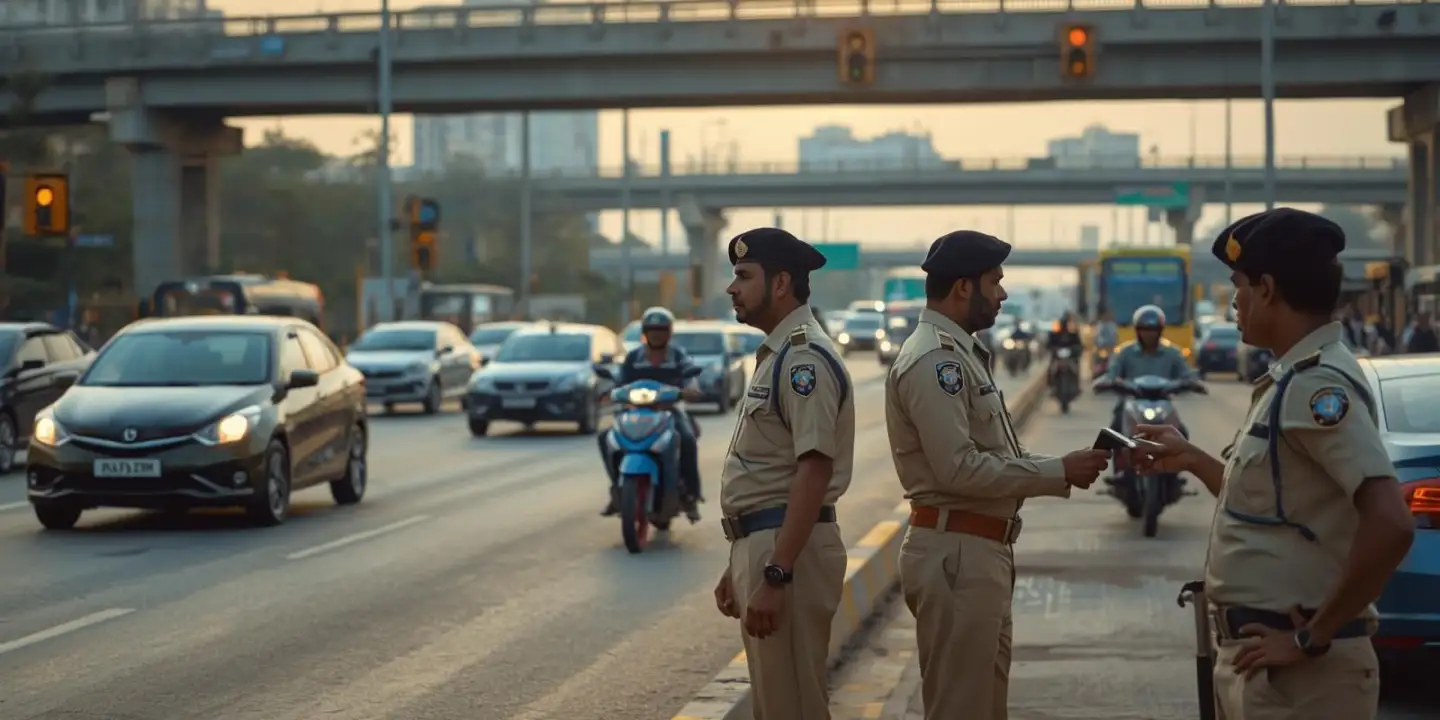
For everyday vehicle owners, One Nation One Challan changes how traffic fines affect daily life
Drivers should note:
- All challans linked to a vehicle appear in one place
- Pending fines can block RC transfers or vehicle resale
- Driving license renewals may be delayed if dues remain unpaid
For instance, drivers in Telangana can already check e-challan records through the state traffic portal, Parivahan, or approved platforms to see all fines digitally
What Lies Ahead For One Nation One Challan
For smoother nationwide adoption, authorities need to focus on:
- Faster integration across all remaining states
- Stronger systems to correct wrong challans
- Public awareness about official payment platforms
- Clear rules on how unpaid fines affect licenses and RC services
One Nation One Challan is India’s most wide-reaching traffic enforcement reform so far. By bringing traffic police, transport offices, and courts onto a single digital network, challans now follow vehicles across state borders and are harder to ignore
The push to create virtual traffic courts under this initiative shows how states are aligning with the national vision. While technical issues and slow dispute handling still exist, the system promises greater transparency, accountability, and nationwide access. Drivers are advised to regularly check their challan status, clear dues on time, and keep their records clean
ALSO READ:
Tags:
CarOnPhone is your one-stop destination to see all upcoming cars, latest cars, released cars, and EV Cars, and compare Cars in all Car Brands. Stay tuned and follow us to update yourself on the automotive world.